satapathy.sb@gmail.com

satapathy.sb@gmail.com

World of Injectables

Injectables in Pharmaceuticals: Mechanisms, Regulatory Pathways, Cost, Market Trends, and Innovations Across Therapeutic Domains Introduction Injectable pharmaceuticals have become a cornerstone of modern medicine, offering rapid, targeted, and often life-saving interventions across a spectrum of diseases. Their applications span general…

Peptides & Biosimilars

Peptides vs Biosimilars: A Comprehensive Industry Blog 📌 Introduction Peptides and biosimilars are two rapidly evolving segments of the pharmaceutical industry. While peptides are short chains of amino acids with therapeutic potential, biosimilars are highly similar versions of approved biologic…

WFI

Water for Injection (WFI) Series Overview and Editorial Plan Pharmaceutical water systems are the backbone of drug manufacturing, ensuring the safety, efficacy, and regulatory compliance of every product that reaches patients. Among the various water grades, Water for Injection (WFI)…

PW in Pharma

Pharmaceutical Purified Water (PW) System 1. Introduction to Purified Water (PW) and Its Applications in Pharmaceuticals Purified Water (PW) is a cornerstone utility in pharmaceutical manufacturing, serving as a critical ingredient, solvent, and cleaning agent across a wide spectrum of processes. Its significance is underscored by its direct impact on product quality, patient safety,…

PEPTIDES

💉 Peptides & Modern Drug Delivery Systems: Pros, Cons, and Future Perspectives Drug delivery is undergoing a revolution. From peptide therapeutics to prefilled syringes (PFS), cartridges, and pen injectors, the industry is shifting toward patient‑centric, self‑administered formats. Alongside, automation and…

Water – Post Treat

🌊 Pharmaceutical Water Treatment & Post-Treatment: A Complete Guide Water is the most widely used raw material in pharmaceutical manufacturing. From cleaning equipment to serving as a direct excipient, its quality directly impacts product safety and efficacy. This blog explores…

STI

🌐 Sterility Testing Isolators (STI): A Practical Guide for Pharma Microbiology Labs 📖 Introduction Sterility testing is not just a regulatory checkbox — it is the final safeguard for patient safety. Every sterile product, from life-saving injectables to delicate ophthalmic…

Pre- Water in Pharma

Pharmaceutical Water Treatment and Drinking Water Standards: A Comprehensive Global Guide Introduction Water is the lifeblood of both public health and pharmaceutical manufacturing. Its quality directly impacts human well-being, the safety of medicines, and the integrity of healthcare systems worldwide.…

LYO

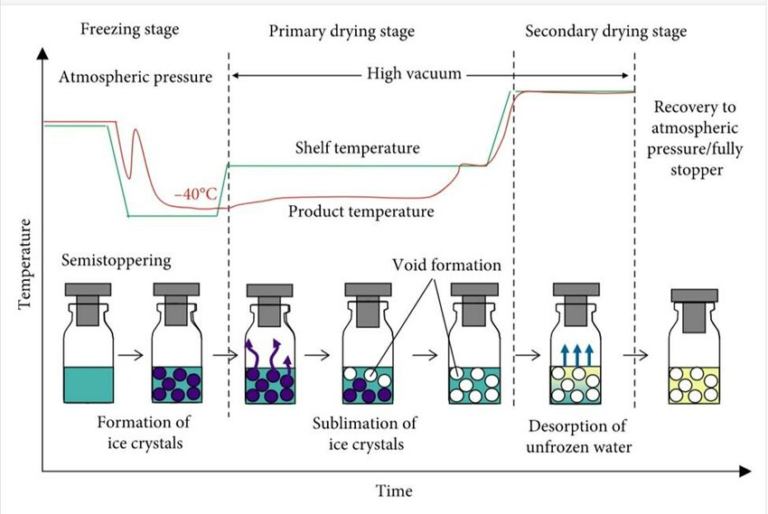
Lyophilization (Freeze-Drying) in the Pharmaceutical Industry: Scientific Principles, Process Stages, Applications, Regulatory Perspectives, Innovations, and Future Outlook Introduction Lyophilization, commonly known as freeze-drying, is a cornerstone technology in the pharmaceutical industry, enabling the stabilization and long-term storage of sensitive drug…

TS

Terminal Sterilization in Injectable Pharmaceutical Products: Concepts, Comparisons, and Future Directions Introduction Sterility is a non-negotiable requirement for injectable pharmaceutical products. The direct administration of these products into the body bypasses natural defense mechanisms, making any microbial contamination potentially life-threatening.…

CCIT

CCIT – Container Closure Integrity Testing: Methods and Regulatory Expectations Introduction: The Critical Role of CCIT in Parenteral Pharmaceuticals Container Closure Integrity Testing (CCIT) stands as a cornerstone of quality assurance in the pharmaceutical industry, particularly for parenteral drug products.…

Aseptic Process Advances

🧪 Aseptic Processing Advances: Latest Technologies in Sterile Manufacturing Sterile pharmaceutical manufacturing is evolving rapidly, driven by digitalization, robotics, and stricter regulatory expectations. Aseptic processing—essential for injectables, biologics, and advanced therapies—demands precision, control, and innovation. This blog explores the latest…

O Rabs – C Rabs Vs Isolators

RABS (Restricted Access Barrier Systems) and Isolators are advanced containment technologies used in pharmaceutical aseptic manufacturing. RABS offer flexible access with moderate containment, while Isolators provide complete separation and maximum sterility assurance. Each has distinct advantages, limitations, and application areas.…

Ampoule sealing

Ampoule sealing in high-speed pharmaceutical lines demands precise control of parameters like flame intensity, rotation speed, and sealing time. Regulatory guidelines define strict rejection limits to ensure sterility, integrity, and patient safety. 🔥 Ampoule Sealing in High-Speed Lines: Parameters, Concerns…

PFS Vs Cartridges

💉 Prefilled Syringes (PFS) vs Cartridges in Injectables 🔍 Definitions ⚙️ How They’re Used Feature Prefilled Syringe (PFS) Cartridge Usage Direct injection by healthcare provider or patient Inserted into pen/autoinjector for multiple or controlled doses Delivery Mode Manual push Mechanical…

Drug Product & Drug Substance

Difference Between Drug Substance and Drug Product The pharmaceutical industry clearly distinguishes between a Drug Substance (API) and a Drug Product. Understanding this difference is essential for formulation development, validation, and regulatory compliance. 1️⃣ Basic Definition Aspect Drug Substance (DS)…

LYOPHILIZER WI-FI SENSORS

🌡️ Wi-Fi Based Lyophilizer Vial Temperature Sensors: Working, Benefits, and Global Technologies 🧊 Introduction: Why Product Temperature Matters in Lyophilization In pharmaceutical freeze-drying (lyophilization), product temperature is the most critical parameter that determines the quality, stability, and biological activity of…

SOLVENTS IN PHARMA

Here’s a comprehensive and structured report on the rules and regulations for solvent storage in Indian pharmaceutical industries, governed by PESO (Petroleum and Explosives Safety Organization) and other relevant authorities. This is suitable for publishing on your blog. 📘 Solvent…

AUTOCLAVE VACUUM PUMP COOLING WATER

The difficulty in recirculating cooling water for an autoclave vacuum pump—especially in pharmaceutical or chemical processing environments—stems from several technical and operational factors. Here’s a breakdown of why draining is often preferred over recirculation: 1. Contamination Risk • Vacuum pumps…

Lyophilzed Vial Automaic inspection Vs Manual

✅ Online Inspection of Lyophilized Vials: Feasibility and Technology Modern systems like ATS Automation’s Lyoscan and others use: Up to 28 high-resolution cameras Structured lighting systems AI-driven defect classification 3D laser scanning and hyperspectral imaging These systems perform 40+ inspections…

Sustainability

Sustainability is a key principle in industries like pharmaceuticals, where balancing environmental responsibility, economic feasibility, and social impact is crucial. In pharmaceutical manufacturing, sustainability could mean reducing waste, optimizing energy use, and ensuring safe working conditions while maintaining regulatory compliance.…

Fluidization

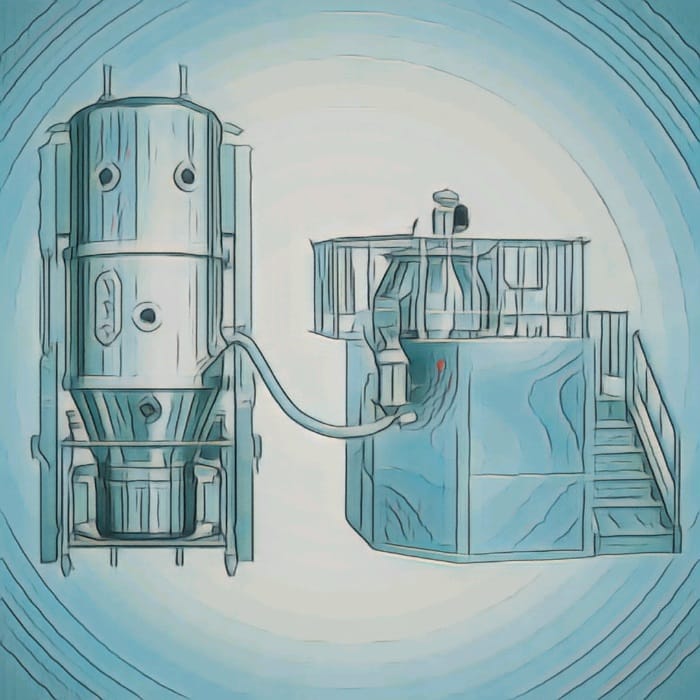
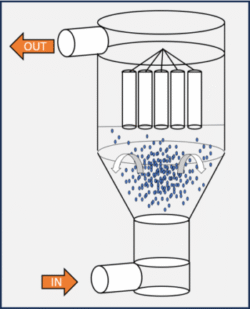
Fluidization Process in Fluid Bed Dryers Understanding the Dynamics of Fluidization Process in Fluid Bed Dryers In a batch fluid-bed dryer (FBD), dry hot air is passed upward through a perforated distribution plate at the base of a stainless-steel vessel,…

Aseptic vs Non-Aseptic Injectables

Injectable Vial Manufacturing: Aseptic vs Non-Aseptic Processes Injectable drugs require the highest level of precision and sterility during manufacturing. Depending on the nature of the drug, manufacturers use two primary approaches: aseptic processing and terminal sterilization (non-aseptic). This blog provides a detailed comparison of…